
A sophisticated cinematic editorial cover featuring a glowing 3D blockchain lattice and holographic dashboards illustrating on-chain data for investors against a deep navy financial background.

On-Chain Data for Investors: Metrics Every Crypto Investor Should Track

On-chain data for investors is the practice of reading blockchain-native information — wallet balances, coin movements, and spending behavior — to gauge market health before price reacts. Unlike price charts, these metrics reveal what holders are actually doing, helping investors identify accumulation, distribution, and cycle extremes with verifiable, transparent evidence.

Most investors stare at candlestick charts and miss the deeper signal. Price tells you what already happened; on-chain data for investors often hints at what is about to happen. Every transaction settled on a public blockchain leaves a permanent, auditable record — and that ledger has become one of the most powerful analytical edges in modern markets. In early 2026, this edge proved its worth: while the Fear & Greed Index sat in extreme fear and headlines declared crypto dead, on-chain analysts watched whale wallets quietly absorb 270,000 BTC in a single month, the largest haul since 2013. This guide walks through the core metrics professional analysts rely on, how to read them, and why they matter for disciplined, long-term positioning rather than speculation. read more
Continue Reading...
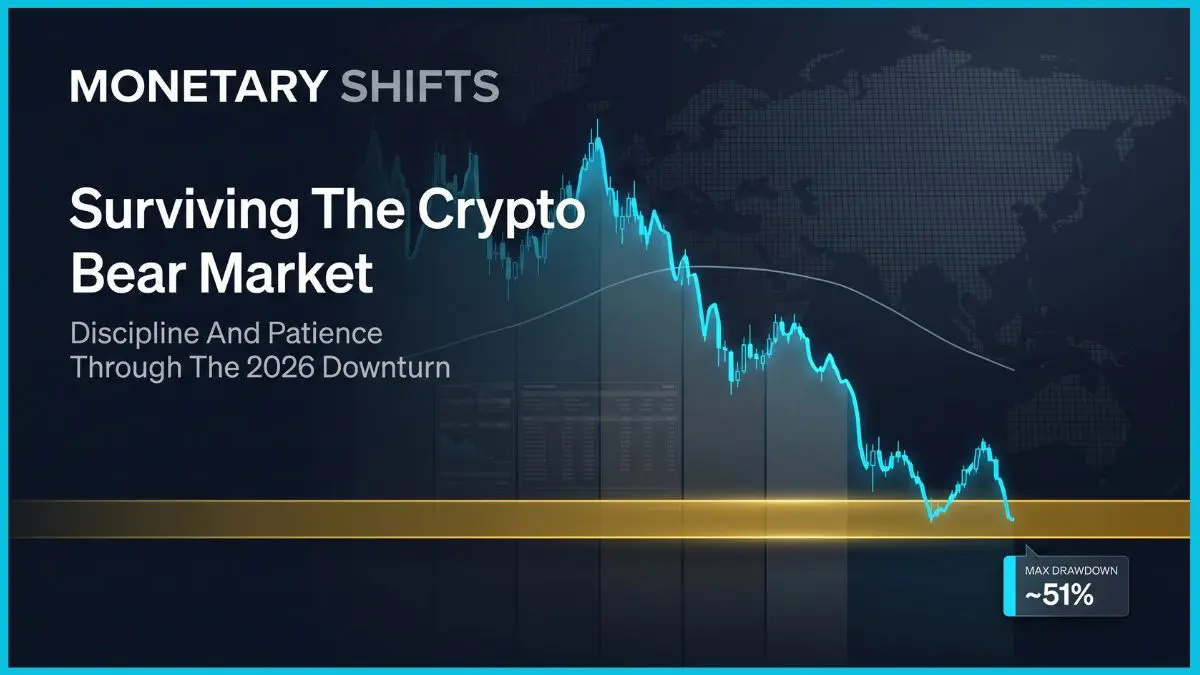
A premium editorial financial cover for 'Monetary Shifts' featuring a glowing cyan Bitcoin price line descending and stabilizing on a luminous gold support band. The background is a sophisticated navy blue global macro grid with professional typography reading Surviving The Crypto Bear Market Strategy.

Crypto Bear Market Strategy: How Long-Term Investors Survive the Downturn

A crypto bear market strategy is a structured plan that protects long-term capital during sustained price declines. It combines dollar-cost averaging, disciplined asset selection, liquidity reserves, and emotional control. The goal is not to time the exact bottom, but to accumulate quality assets and preserve solvency until the next cycle recovery begins.

Introduction

The 2025–2026 downturn has tested even seasoned investors. After Bitcoin peaked near $126,000 in October 2025, the market reversed sharply, and by late June 2026 prices had fallen roughly 50% from that high. A disciplined crypto bear market strategy is what separates investors who compound through cycles from those who capitulate at the worst possible moment. According to CoinGecko research, the current episode has so far registered a maximum drawdown of about 51%, making it the mildest bear market on record relative to Bitcoin’s prior cycles. That comparative resilience reflects deeper institutional participation, established ETF infrastructure, and a maturing market structure. This guide explains how long-term investors can navigate the downturn with a framework grounded in historical data, on-chain evidence, and risk management rather than fear. read more

Continue Reading...
A professional editorial financial cover featuring five glowing cyan network nodes interconnected by data lines, representing top altcoins to watch for institutional capital rotation beyond Bitcoin and Ethereum.

Top Altcoins to Watch in 2026 (Beyond Bitcoin and Ethereum)

The altcoins to watch in 2026 are no longer judged by hype or speed alone. With Bitcoin trading as a macro asset and Ethereum cementing its role as institutional settlement infrastructure, capital is rotating selectively into a small group of alternative cryptocurrencies that can prove real on-chain revenue, regulated access, or enterprise integration. This guide explains which projects matter, why, and how to evaluate them without chasing a buy list.

What Are the Top Altcoins to Watch in 2026?

The leading altcoins to watch in 2026 are Solana, XRP, Chainlink, Avalanche, and Cardano. Each represents a distinct thesis: high-throughput application chains, regulated cross-border payments, real-world-asset oracle infrastructure, configurable enterprise networks, and compliance-focused settlement. They matter because institutional ETF access and verifiable on-chain activity now drive demand rather than speculation. read more

Continue Reading...
A serious, Bloomberg-style editorial cover showing a 3D modular blockchain architecture with translucent layers and glowing cyan data beams representing layer 2 scaling solutions anchoring into a navy blue base layer. Professional typography on the left reads 'THE LAYER 2 ERA' with financial data points.

Layer 2 Scaling Solutions Explained: Rollups, Channels and More

Layer 2 scaling solutions are separate networks built on top of a base blockchain like Ethereum or Bitcoin. These Layer 2 scaling solutions process transactions off the main chain and settle them back to it, delivering faster confirmations and fees often 10 to 100 times cheaper while inheriting the security of the underlying Layer 1.

Introduction

For most of its history, Ethereum faced a hard constraint: the base chain processes only about 15 transactions per second, and Bitcoin fewer still. During periods of heavy demand, fees climbed to tens of dollars and confirmations slowed, pricing out everyday users. Layer 2 scaling solutions emerged as the dominant answer to this problem, moving execution off-chain while preserving the trust guarantees of the settlement layer. read more

Continue Reading...
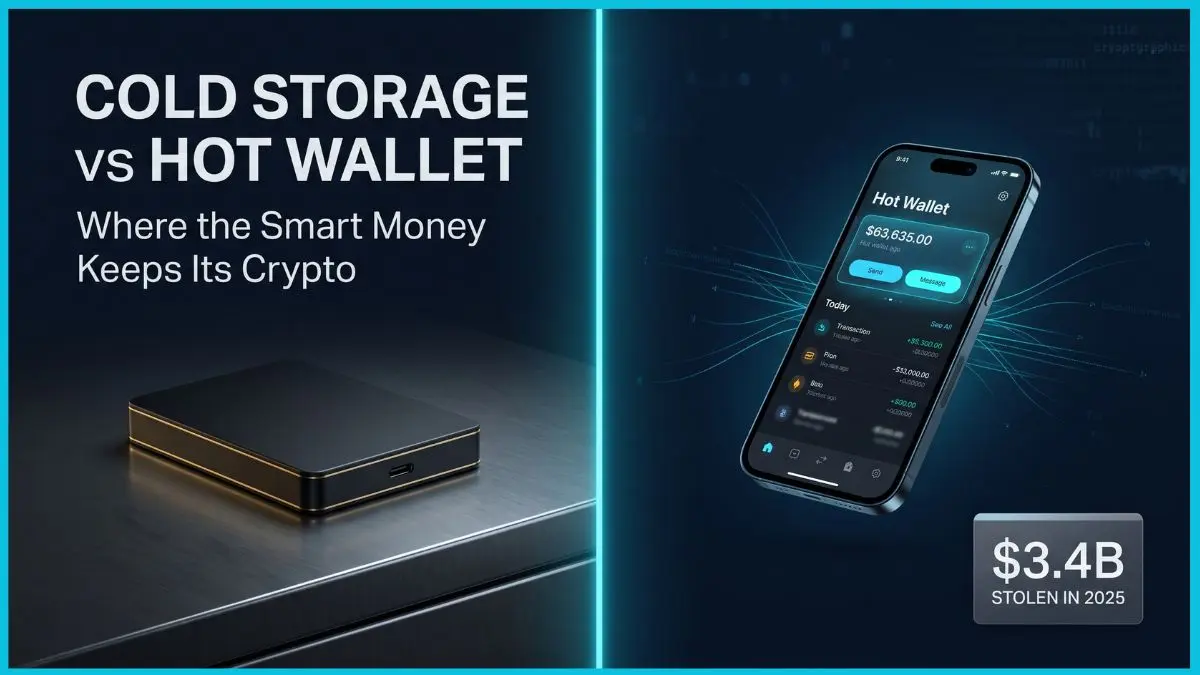
A split-screen editorial cover showing a matte-black hardware cold storage device on the left and a glowing smartphone hot wallet on the right, divided by a vertical cyan line.

Cold Storage vs Hot Wallet: Where Should You Keep Your Crypto?

Cold storage vs hot wallet is the choice between keeping cryptocurrency offline on a hardware device or online in software connected to the internet. Cold storage prioritizes long-term security by isolating private keys from networks, while hot wallets prioritize speed and convenience for active trading. Most investors use both.

Few decisions shape an investor’s security posture more than the cold storage vs hot wallet question. As capital floods back into digital assets and tens of millions of new holders enter the market, the way private keys are stored has become the single largest determinant of whether funds survive. The stakes are not theoretical: Chainalysis recorded roughly $3.4 billion stolen across the cryptocurrency ecosystem in 2025, the highest annual figure since 2022, with personal wallet compromises reaching 158,000 incidents. Understanding this trade-off between offline and online custody is therefore foundational to any serious approach to self-custody. This guide breaks down how each method works, what the data reveals about real-world risk, and how institutional and retail holders are combining both to balance security against accessibility. read more

Continue Reading...
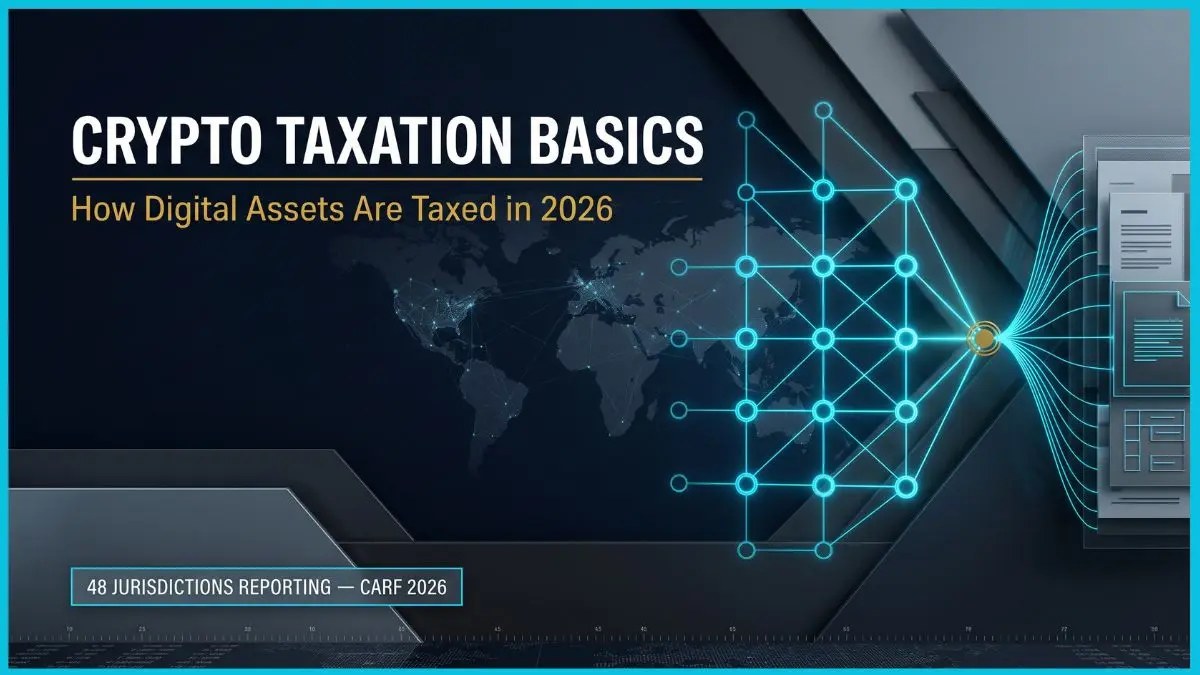
A high-end financial editorial cover featuring a glowing cyan blockchain ledger grid converging into a golden institutional tax document, set against a dark navy background with a faint world map and bold typography.

Crypto Taxation Basics: What Every Investor Should Know

In most major economies, cryptocurrency is treated as property for tax purposes, meaning that selling, swapping, spending, or earning digital assets can trigger a taxable event. Crypto taxation basics rest on two pillars: capital gains tax when you dispose of an asset, and income tax when you receive one. Understanding both is now essential.

The landscape that crypto investors face in 2026 looks nothing like the loosely policed environment of a few years ago. Tax authorities now receive transaction data directly from exchanges, and a coordinated international reporting regime has begun operating across dozens of countries. For anyone holding Bitcoin, Ethereum, stablecoins, or DeFi positions, tthe margin for error has narrowed sharply. If you are new to digital assets entirely, start with our beginner’s guide to the cryptocurrency market before tackling the tax layer. Yet the underlying principles of crypto taxation basics remain stable and learnable. The United States Internal Revenue Service has classified digital assets as property since 2014, a treatment that anchors how gains, losses, and income are calculated. This guide explains what every investor should know: which events are taxable, how gains are measured, how income from staking and mining is treated, and how the new global transparency framework changes the compliance picture. Whether you trade occasionally or manage a diversified crypto portfolio, the goal is the same — classify each event correctly and keep records that withstand scrutiny. read more

Continue Reading...
A high-end editorial cover featuring a luminous abstract globe made of glowing cyan and gold blockchain nodes. The background shows sophisticated silhouettes of financial towers. To the left, clean typography reads 'THE DECENTRALIZED INTERNET ARRIVES,' illustrating the rise of web3 adoption.

Web3 Adoption and the Future of the Internet

Web3 adoption is the migration of users, capital, and applications from centralized internet platforms toward blockchain-based networks that grant individuals direct ownership of assets, identity, and data. It matters because it reshapes how value moves online, blurring the line between traditional finance and decentralized systems and redefining who controls the digital economy.

Few technological shifts carry as much economic weight as the transition toward a decentralized internet. Web3 adoption sits at the intersection of finance, infrastructure, and monetary policy, and its trajectory now influences how institutions custody assets, how regulators draft rules, and how billions of people access digital services. As of early 2026, roughly 741 million people own cryptocurrency worldwide, representing about 9.1% of the global population, according to data compiled by CoinLaw. This article examines what Web3 adoption means in practice, who is driving it, where the real growth is concentrated, and why the maturation of this ecosystem is increasingly relevant to the broader financial system rather than a speculative sideshow. read more

Continue Reading...
A professional financial editorial illustration featuring a luminous cyan 3D cube transitioning from a pixelated JPEG mosaic to a solid digital asset, representing the shift in NFTs and digital ownership toward verified financial infrastructure.

NFTs and Digital Ownership: Hype or Real Revolution?

NFTs and digital ownership use blockchain to assign a unique, verifiable record of who controls a digital or real-world asset. After the speculative collapse of 2022, the technology matured into infrastructure for ticketing, loyalty, gaming, and tokenized assets. The hype died; the underlying ownership model did not.

Introduction

Few topics in digital finance divide opinion like NFTs and digital ownership. To critics, non-fungible tokens were the defining bubble of the last cycle — overpriced profile pictures that lost almost all their value. To proponents, the same technology quietly became the settlement layer for verifiable digital property rights. Both views contain truth. By 2023, one widely cited analysis found roughly 95% of NFT collections had effectively zero monetary value, and the speculative frenzy that pushed Pak’s The Merge to $91.8 million in late 2021 evaporated almost entirely. read more

Continue Reading...
A sophisticated cinematic illustration of a glowing geometric shield-fortress protecting digital assets from a dark web of dissolving deepfakes and counterfeit tokens, titled

Crypto Scams to Avoid in 2026: Red Flags and Protection Tips

Crypto scams to avoid in 2026 are no longer crude “get rich quick” pitches — they are AI-industrialized fraud operations that extract roughly 4.5 times more money per victim than older schemes. The most dangerous categories are pig butchering, impersonation fraud, and wallet drainers. Recognizing the red flags early is your best protection.

Introduction

The scale of the problem has reached a turning point. Americans reported $11.37 billion in cryptocurrency-related losses in 2025, a 22% increase over the prior year, according to the FBI’s Internet Crime Complaint Center. Globally, blockchain analytics firm Chainalysis estimates that crypto scams drained as much as $17 billion in the same period. Understanding the crypto scams to avoid in 2026 has therefore become essential financial literacy, not a niche concern for traders. read more

Continue Reading...
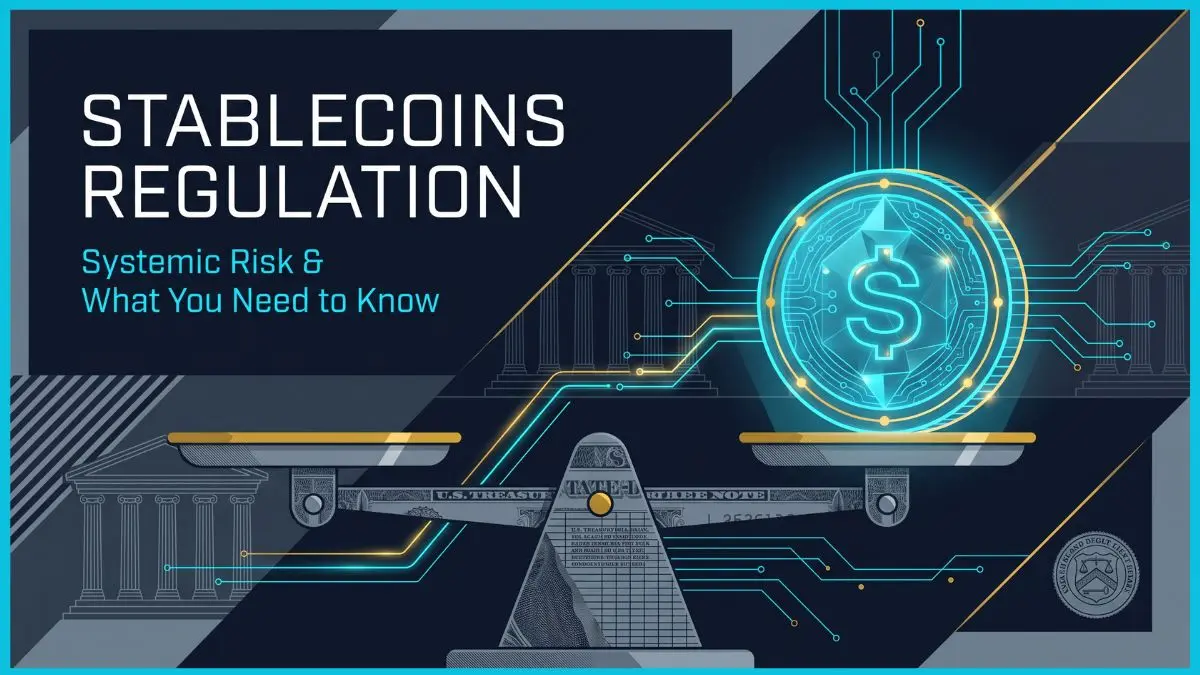
Minimalist editorial illustration on a deep navy background showing a glowing cyan digital coin on a balance scale, connected by circuit lines to regulatory institution columns, representing stablecoins regulation.

Stablecoins Regulation: Systemic Risk and What You Need to Know

Stablecoins regulation is the framework of laws and supervisory rules governing dollar- and asset-pegged digital tokens. It sets reserve, redemption, and disclosure standards designed to keep tokens redeemable at par. It matters because stablecoins now exceed $300 billion in circulation and are increasingly intertwined with the U.S. Treasury market and the broader financial system.

Introduction

Stablecoins regulation has moved from theory to enforcement in a single eighteen-month window. The total stablecoin market grew from roughly $229 billion in April 2025 to more than $307 billion by June 2026, with the market sitting near $313 billion in late June 2026, according to live tracking from DefiLlama. That scale has forced the question central banks once treated as hypothetical: what happens when a privately issued payment instrument becomes large enough to move sovereign debt markets? In the United States, the GENIUS Act created the first federal framework for payment stablecoins. In Europe, the Markets in Crypto-Assets Regulation (MiCA) brought the same instruments inside the regulatory perimeter. This article explains how these regimes work, where systemic risk concentrates, and what the new rules mean for issuers, institutions, and holders navigating a market that is no longer optional reading for finance professionals. read more

Continue Reading...