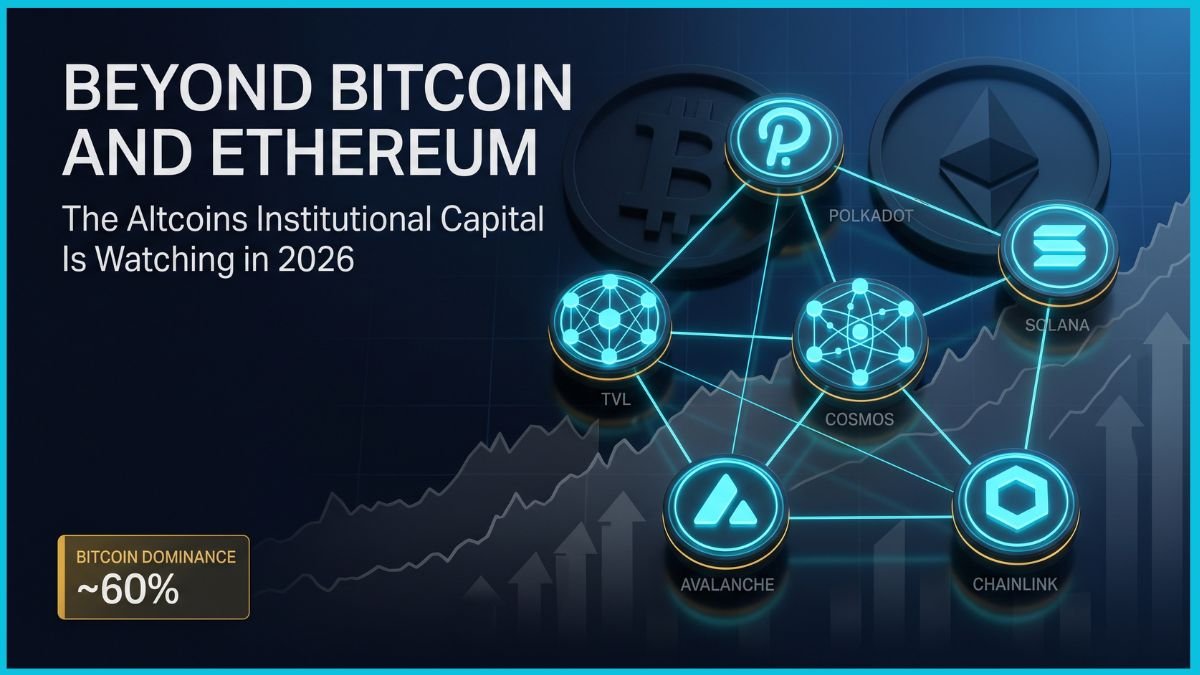
A professional editorial financial cover featuring five glowing cyan network nodes interconnected by data lines, representing top altcoins to watch for institutional capital rotation beyond Bitcoin and Ethereum.

Top Altcoins to Watch in 2026 (Beyond Bitcoin and Ethereum)

The altcoins to watch in 2026 are no longer judged by hype or speed alone. With Bitcoin trading as a macro asset and Ethereum cementing its role as institutional settlement infrastructure, capital is rotating selectively into a small group of alternative cryptocurrencies that can prove real on-chain revenue, regulated access, or enterprise integration. This guide explains which projects matter, why, and how to evaluate them without chasing a buy list.

What Are the Top Altcoins to Watch in 2026?

The leading altcoins to watch in 2026 are Solana, XRP, Chainlink, Avalanche, and Cardano. Each represents a distinct thesis: high-throughput application chains, regulated cross-border payments, real-world-asset oracle infrastructure, configurable enterprise networks, and compliance-focused settlement. They matter because institutional ETF access and verifiable on-chain activity now drive demand rather than speculation. read more

Continue Reading...
A high-end editorial cover featuring a luminous abstract globe made of glowing cyan and gold blockchain nodes. The background shows sophisticated silhouettes of financial towers. To the left, clean typography reads 'THE DECENTRALIZED INTERNET ARRIVES,' illustrating the rise of web3 adoption.

Web3 Adoption and the Future of the Internet

Web3 adoption is the migration of users, capital, and applications from centralized internet platforms toward blockchain-based networks that grant individuals direct ownership of assets, identity, and data. It matters because it reshapes how value moves online, blurring the line between traditional finance and decentralized systems and redefining who controls the digital economy.

Few technological shifts carry as much economic weight as the transition toward a decentralized internet. Web3 adoption sits at the intersection of finance, infrastructure, and monetary policy, and its trajectory now influences how institutions custody assets, how regulators draft rules, and how billions of people access digital services. As of early 2026, roughly 741 million people own cryptocurrency worldwide, representing about 9.1% of the global population, according to data compiled by CoinLaw. This article examines what Web3 adoption means in practice, who is driving it, where the real growth is concentrated, and why the maturation of this ecosystem is increasingly relevant to the broader financial system rather than a speculative sideshow. read more

Continue Reading...
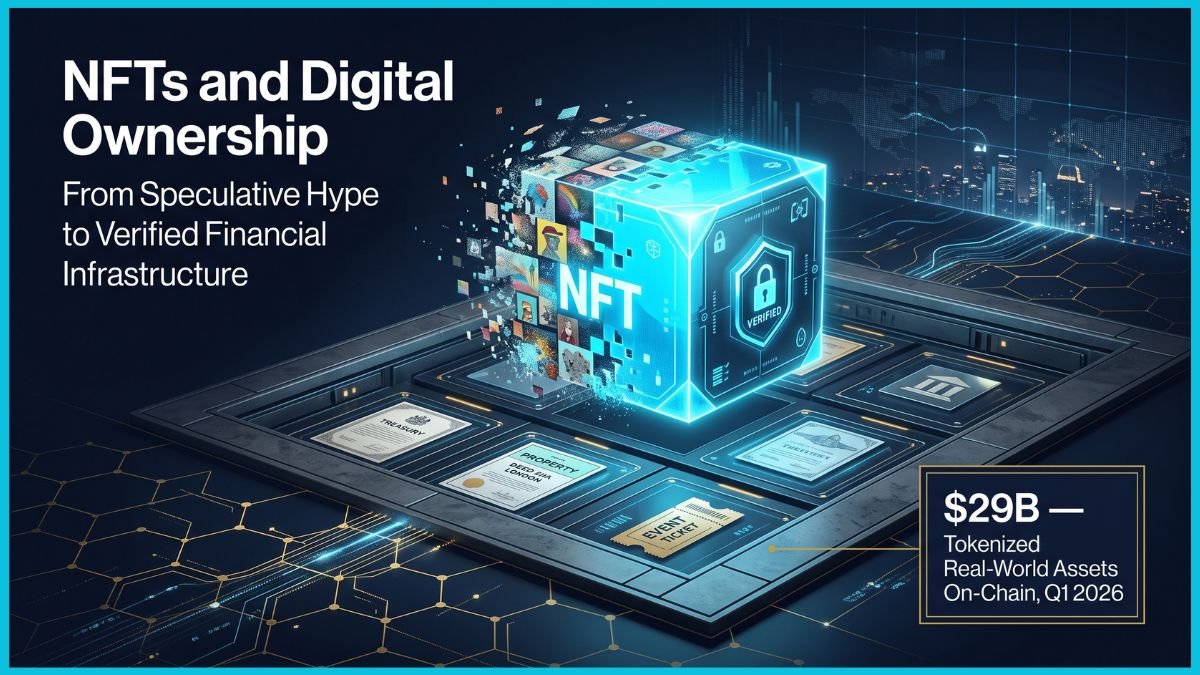
A professional financial editorial illustration featuring a luminous cyan 3D cube transitioning from a pixelated JPEG mosaic to a solid digital asset, representing the shift in NFTs and digital ownership toward verified financial infrastructure.

NFTs and Digital Ownership: Hype or Real Revolution?

NFTs and digital ownership use blockchain to assign a unique, verifiable record of who controls a digital or real-world asset. After the speculative collapse of 2022, the technology matured into infrastructure for ticketing, loyalty, gaming, and tokenized assets. The hype died; the underlying ownership model did not.

Introduction

Few topics in digital finance divide opinion like NFTs and digital ownership. To critics, non-fungible tokens were the defining bubble of the last cycle — overpriced profile pictures that lost almost all their value. To proponents, the same technology quietly became the settlement layer for verifiable digital property rights. Both views contain truth. By 2023, one widely cited analysis found roughly 95% of NFT collections had effectively zero monetary value, and the speculative frenzy that pushed Pak’s The Merge to $91.8 million in late 2021 evaporated almost entirely. read more

Continue Reading...
A professional financial magazine cover titled

Cryptocurrency Market for Beginners: The Ultimate 2026 Guide

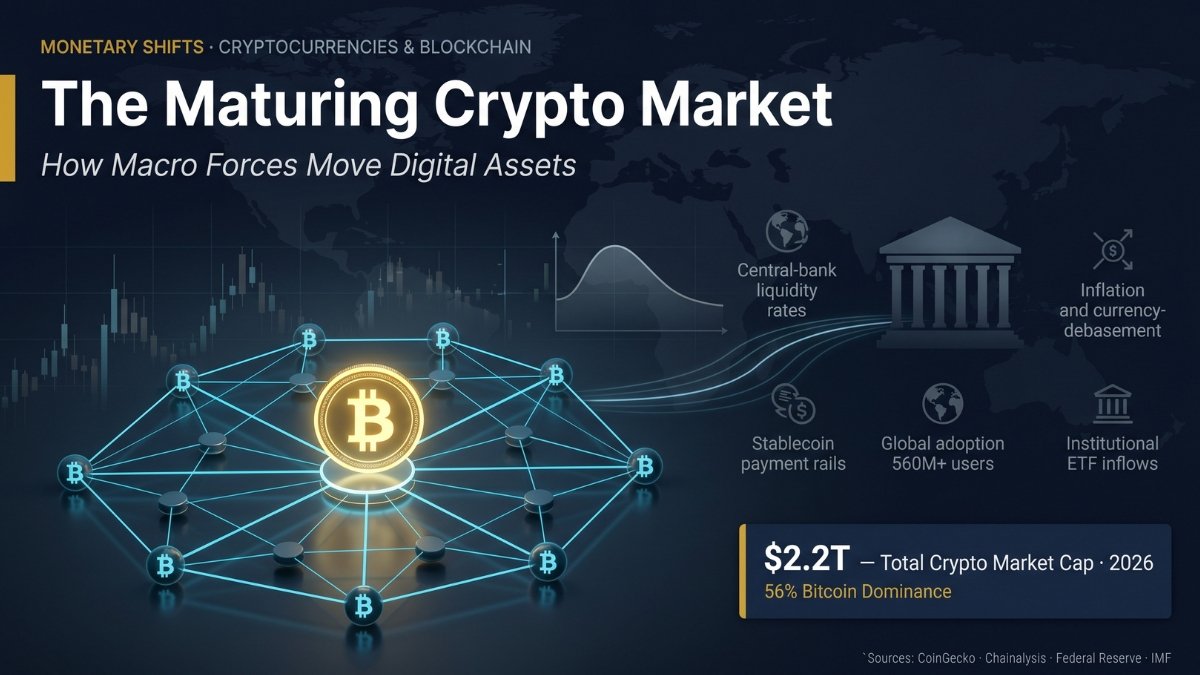
The cryptocurrency market is a global, 24/7 marketplace where digital assets like Bitcoin and Ethereum are issued, traded, and stored on blockchains rather than controlled by central banks. For beginners, it matters because it offers a new asset class with high returns, high volatility, and growing institutional adoption. As of mid-2026, the total crypto market is worth roughly $2.2 trillion.

Introduction

The cryptocurrency market for beginners can feel like stepping into a fast-moving financial frontier where fortunes are made and lost in hours, jargon piles up quickly, and headlines swing between euphoria and panic. Yet beneath the noise sits a maturing asset class that institutional investors, central banks, and regulators can no longer ignore — one that increasingly challenges the traditional financial system it was built to rival. After Bitcoin reached an all-time high of $126,272 in October 2025, the market entered a sharp correction, with total capitalization falling to around $2.4 trillion by the end of the first quarter of 2026, according to CoinGecko’s research team. By mid-2026 it hovered near $2.2 trillion, with Bitcoin commanding roughly 56% dominance. read more

Continue Reading...