
Web3 Adoption and the Future of the Internet
Web3 adoption is the migration of users, capital, and applications from centralized internet platforms toward blockchain-based networks that grant individuals direct ownership of assets, identity, and data. It matters because it reshapes how value moves online, blurring the line between traditional finance and decentralized systems and redefining who controls the digital economy.
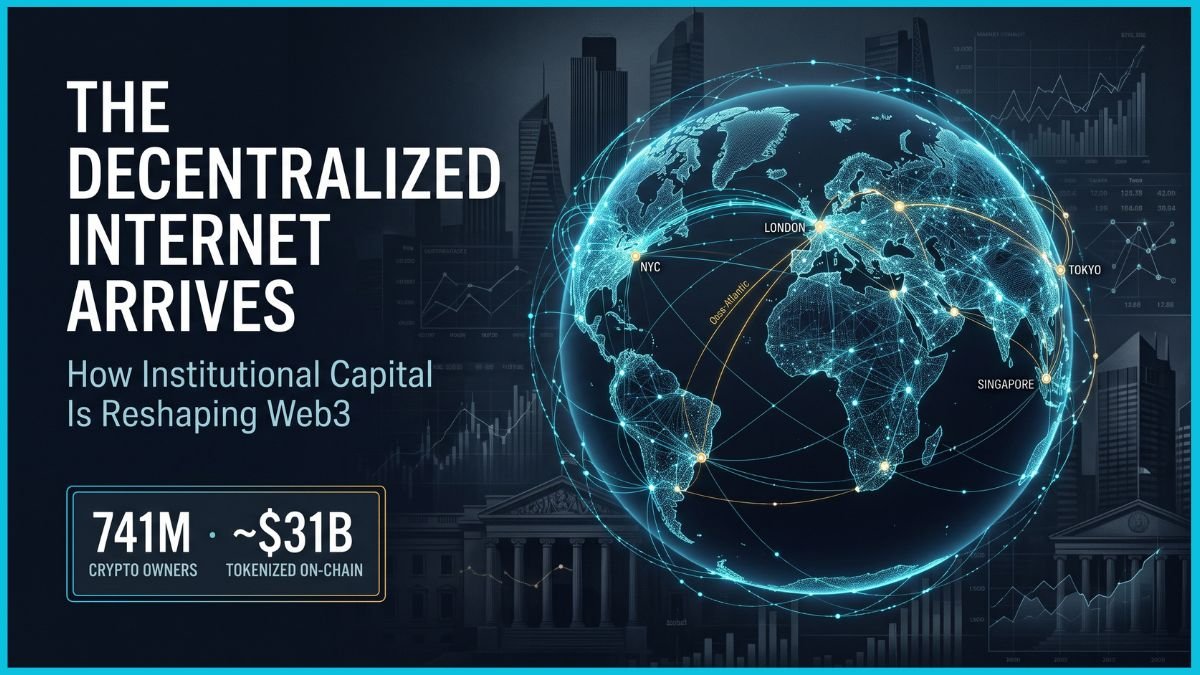
Few technological shifts carry as much economic weight as the transition toward a decentralized internet. Web3 adoption sits at the intersection of finance, infrastructure, and monetary policy, and its trajectory now influences how institutions custody assets, how regulators draft rules, and how billions of people access digital services. As of early 2026, roughly 741 million people own cryptocurrency worldwide, representing about 9.1% of the global population, according to data compiled by CoinLaw. This article examines what Web3 adoption means in practice, who is driving it, where the real growth is concentrated, and why the maturation of this ecosystem is increasingly relevant to the broader financial system rather than a speculative sideshow.

About Financial Cryptarch
Financial Cryptarch is the Founder of Criptocurrencie and a finance professional with over 15 years of experience in Accounting and Corporate Finance. Holding a Bachelor’s Degree in Accounting and an MBA in Corporate Finance, he focuses on cryptocurrencies, macroeconomics, global finance, and international geopolitics, helping readers understand the forces shaping money, markets, and economic power.