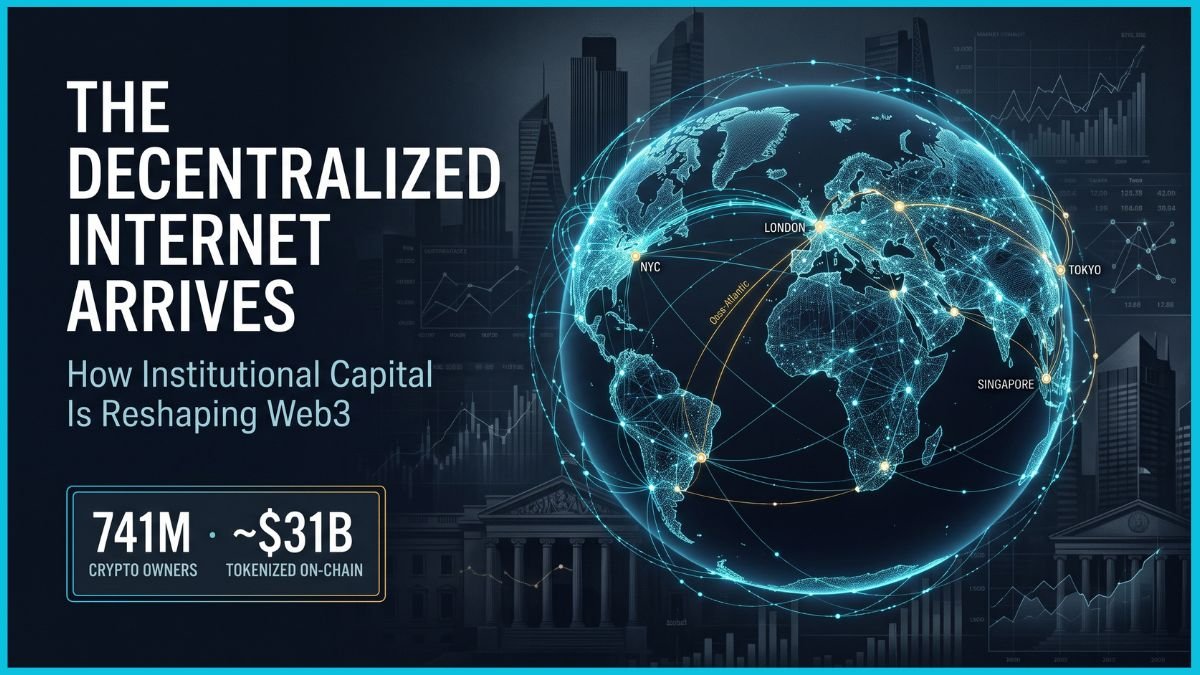
A high-end editorial cover featuring a luminous abstract globe made of glowing cyan and gold blockchain nodes. The background shows sophisticated silhouettes of financial towers. To the left, clean typography reads 'THE DECENTRALIZED INTERNET ARRIVES,' illustrating the rise of web3 adoption.

Web3 Adoption and the Future of the Internet

Web3 adoption is the migration of users, capital, and applications from centralized internet platforms toward blockchain-based networks that grant individuals direct ownership of assets, identity, and data. It matters because it reshapes how value moves online, blurring the line between traditional finance and decentralized systems and redefining who controls the digital economy.

Few technological shifts carry as much economic weight as the transition toward a decentralized internet. Web3 adoption sits at the intersection of finance, infrastructure, and monetary policy, and its trajectory now influences how institutions custody assets, how regulators draft rules, and how billions of people access digital services. As of early 2026, roughly 741 million people own cryptocurrency worldwide, representing about 9.1% of the global population, according to data compiled by CoinLaw. This article examines what Web3 adoption means in practice, who is driving it, where the real growth is concentrated, and why the maturation of this ecosystem is increasingly relevant to the broader financial system rather than a speculative sideshow. read more

Continue Reading...
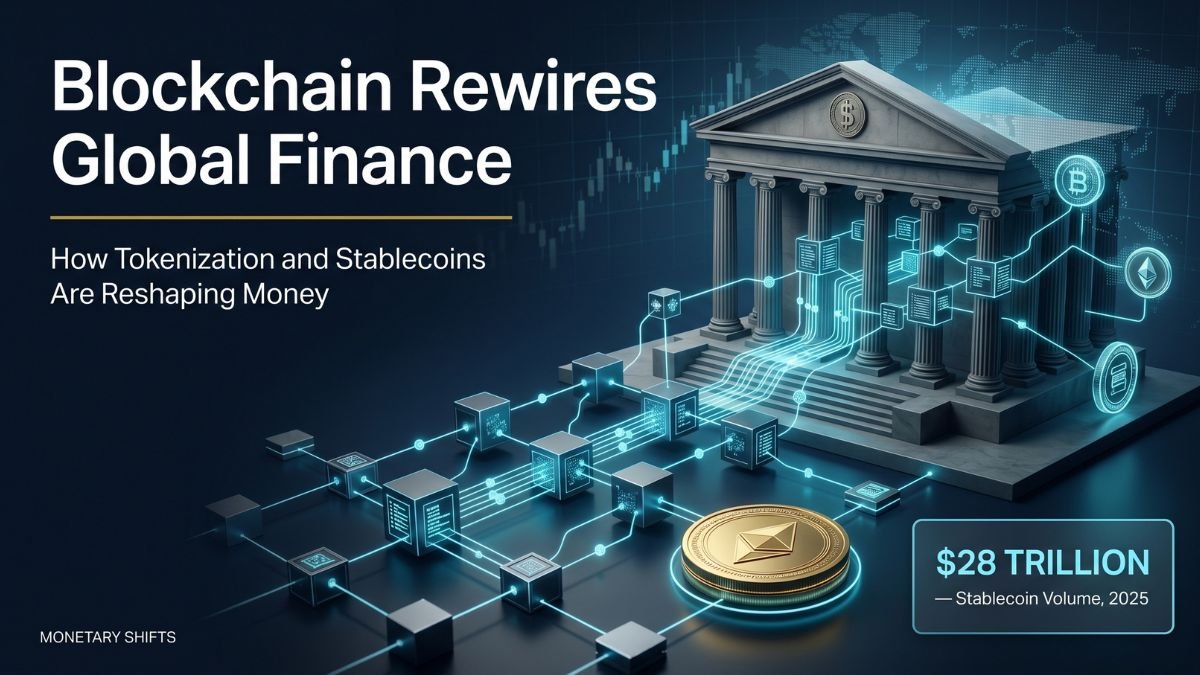
A sophisticated editorial cover showing a classical financial building merging with a glowing cyan digital network and tokenized assets, illustrating the integration of blockchain technology in finance.

Blockchain Technology in Finance: How It Is Transforming Global Markets

Blockchain technology in finance is the use of distributed, cryptographically secured ledgers to record, settle, and automate financial transactions without relying solely on central intermediaries. It matters because it compresses settlement times, lowers costs, and adds transparency to a system built on trust. Its main impact: traditional finance and digital assets are converging into a single, programmable infrastructure.

The financial system is undergoing its most significant structural change since the move from paper certificates to electronic book-entry records. Understanding how blockchain reshapes money requires seeing it against the backdrop of the global financial system it is rebuilding. For decades, moving money and securities depended on layers of intermediaries, reconciliation, and multi-day settlement windows. Blockchain technology in finance challenges that architecture by offering a shared, tamper-evident record that updates in near real time. The shift is no longer theoretical. In 2026, blockchain and crypto are accelerating into mainstream finance through rising institutional adoption, clearer regulation, expanding tokenization, and maturing decentralized finance, according to industry analysis tracking the convergence of traditional and decentralized systems. read more

Continue Reading...
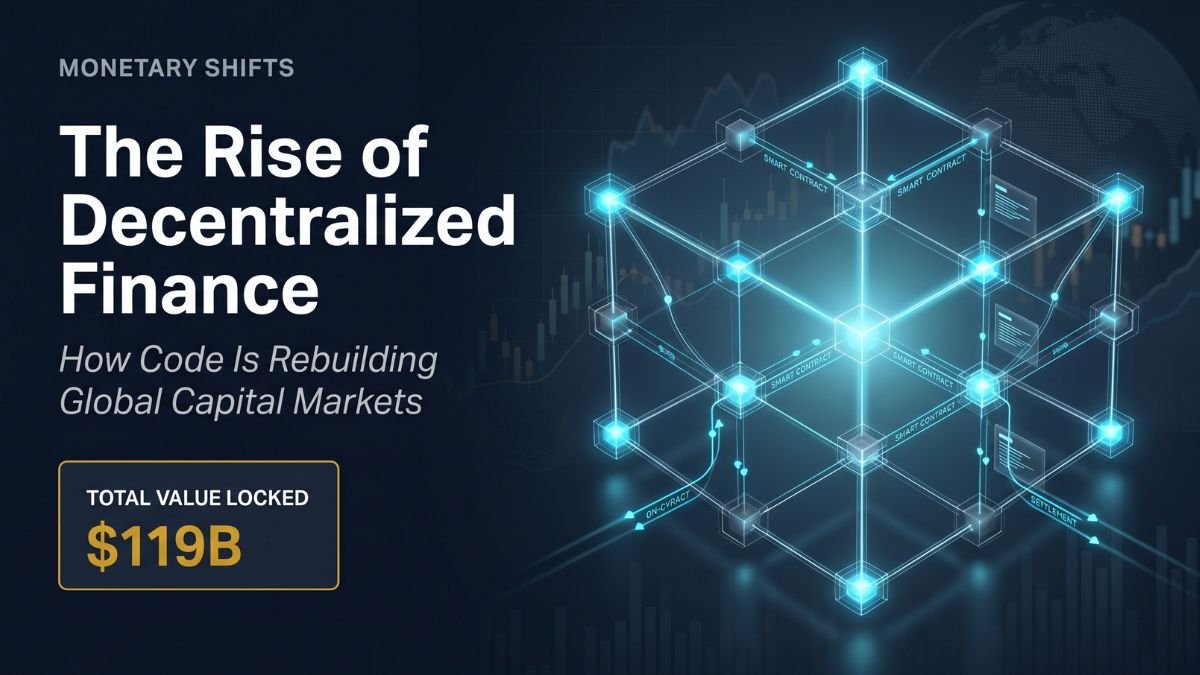
A premium editorial cover for Monetary Shifts featuring a luminous 3D blockchain network symbolizing DeFi and decentralized finance infrastructure, with institutional typography and a data card showing $119B Total Value Locked.

DeFi and Decentralized Finance: A Complete Guide for Investors

DeFi, or decentralized finance, is a system of financial services—lending, trading, borrowing, and earning yield—built on public blockchains and executed by smart contracts instead of banks. It matters because it removes intermediaries from finance, and its principal impact is open, programmable access to capital markets that now secure well over $100 billion in deposited assets globally.

Introduction

For most of modern history, access to credit, market-making, and yield was gated by licensed institutions: banks, brokers, clearinghouses, and exchanges. DeFi and decentralized finance challenge that arrangement by replacing the intermediary with code. On networks like Ethereum and Solana, a lending market, a derivatives venue, or a foreign-exchange desk can run as a set of audited smart contracts that anyone with a wallet can use, around the clock, without permission. read more

Continue Reading...