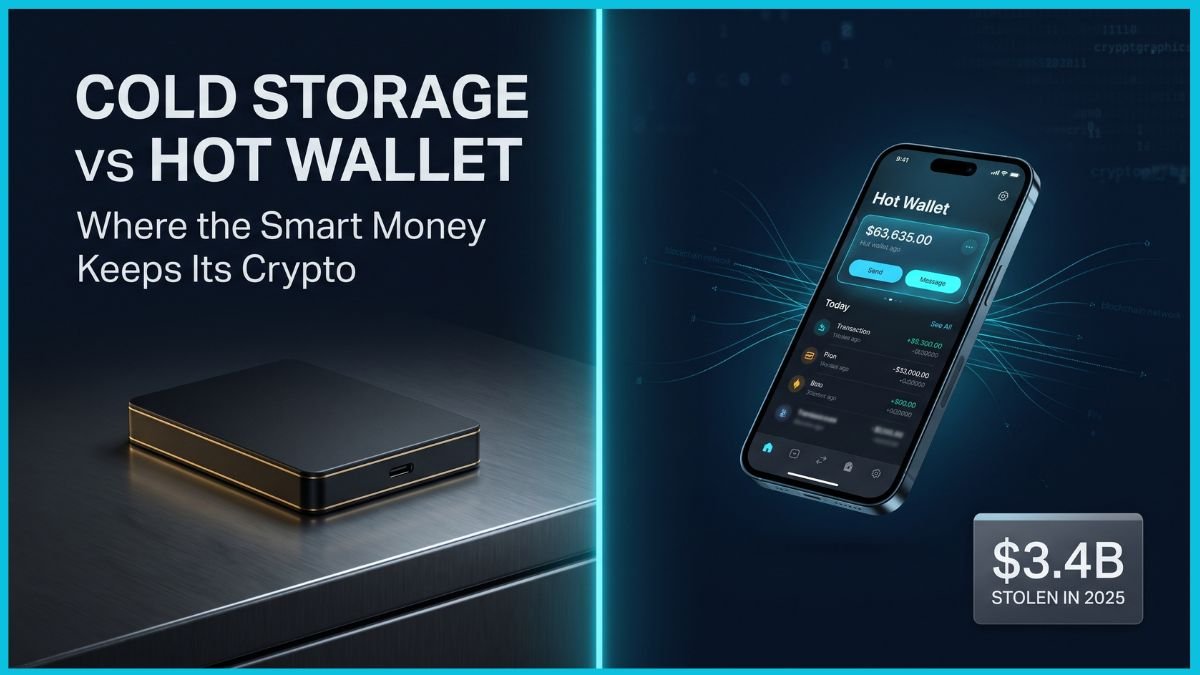
A split-screen editorial cover showing a matte-black hardware cold storage device on the left and a glowing smartphone hot wallet on the right, divided by a vertical cyan line.

Cold Storage vs Hot Wallet: Where Should You Keep Your Crypto?

Cold storage vs hot wallet is the choice between keeping cryptocurrency offline on a hardware device or online in software connected to the internet. Cold storage prioritizes long-term security by isolating private keys from networks, while hot wallets prioritize speed and convenience for active trading. Most investors use both.

Few decisions shape an investor’s security posture more than the cold storage vs hot wallet question. As capital floods back into digital assets and tens of millions of new holders enter the market, the way private keys are stored has become the single largest determinant of whether funds survive. The stakes are not theoretical: Chainalysis recorded roughly $3.4 billion stolen across the cryptocurrency ecosystem in 2025, the highest annual figure since 2022, with personal wallet compromises reaching 158,000 incidents. Understanding this trade-off between offline and online custody is therefore foundational to any serious approach to self-custody. This guide breaks down how each method works, what the data reveals about real-world risk, and how institutional and retail holders are combining both to balance security against accessibility. read more

Continue Reading...
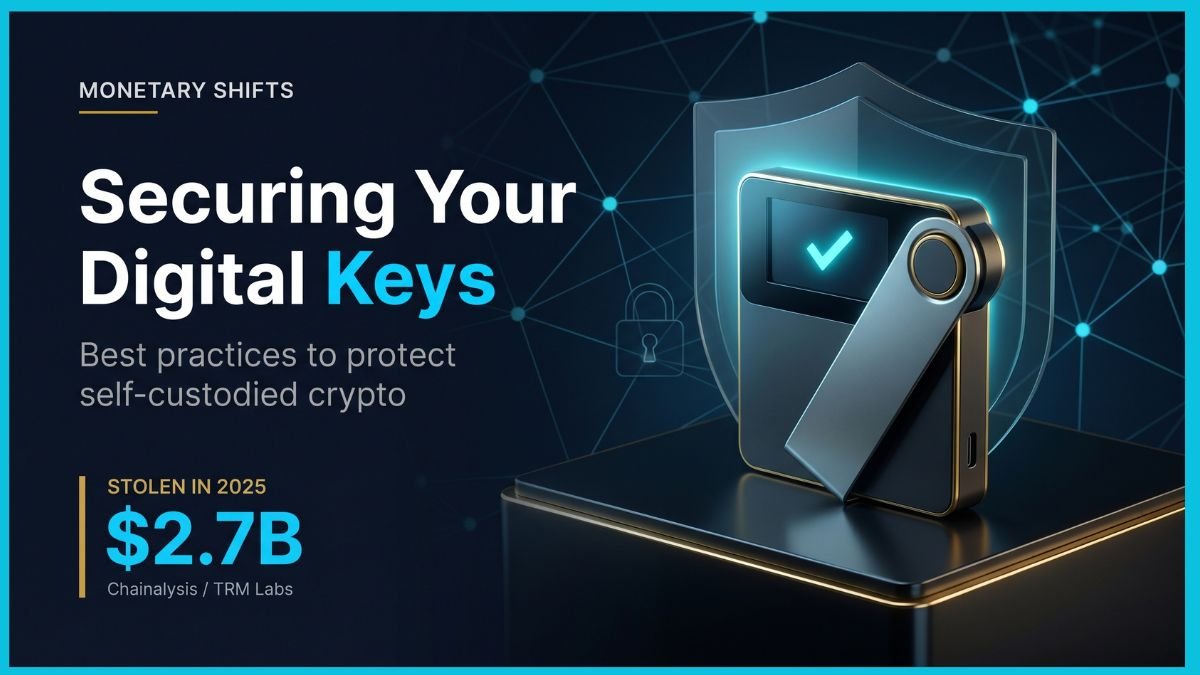
A premium cinematic editorial cover for Monetary Shifts featuring a sophisticated crypto hardware wallet. The device is glowing with an electric cyan checkmark, illustrating institutional-grade crypto wallet security and self-custody against a deep navy blue blockchain lattice background.

Crypto Wallet Security: Best Practices to Protect Your Coins

Crypto wallet security is the set of practices that keep the private keys controlling your digital assets out of an attacker’s reach. It works by storing keys offline, verifying every transaction on a trusted screen, and protecting your recovery phrase. It matters because, on most blockchains, a stolen key means an irreversible loss with no bank or insurer to reverse it.

Introduction

Self-custody puts you in charge of your own money, but it also makes you your own security department. In 2025, blockchain forensics firm Chainalysis tracked roughly $2.7 billion in stolen crypto, and personal wallet compromises surged to around 158,000 incidents affecting at least 80,000 individual victims. The threat is no longer aimed only at exchanges; ordinary holders are now squarely in the crosshairs. Strong crypto wallet security is what separates investors who keep their coins from those who learn the meaning of “not your keys, not your coins” the hard way. This crypto wallet security guide explains how wallets actually protect your assets, the practices institutional desks and serious self-custodians rely on, and the mistakes that drain wallets fastest. It sits within the broader story of how digital assets are reshaping custody, settlement, and ownership across the global financial system — and gives you a defensible playbook you can apply today. For readers still mapping the broader landscape, our guide to the cryptocurrency market for beginners places self-custody within the full market context. read more

Continue Reading...