
Crypto Wallet Security: Best Practices to Protect Your Coins
Crypto wallet security is the set of practices that keep the private keys controlling your digital assets out of an attacker’s reach. It works by storing keys offline, verifying every transaction on a trusted screen, and protecting your recovery phrase. It matters because, on most blockchains, a stolen key means an irreversible loss with no bank or insurer to reverse it.
Introduction
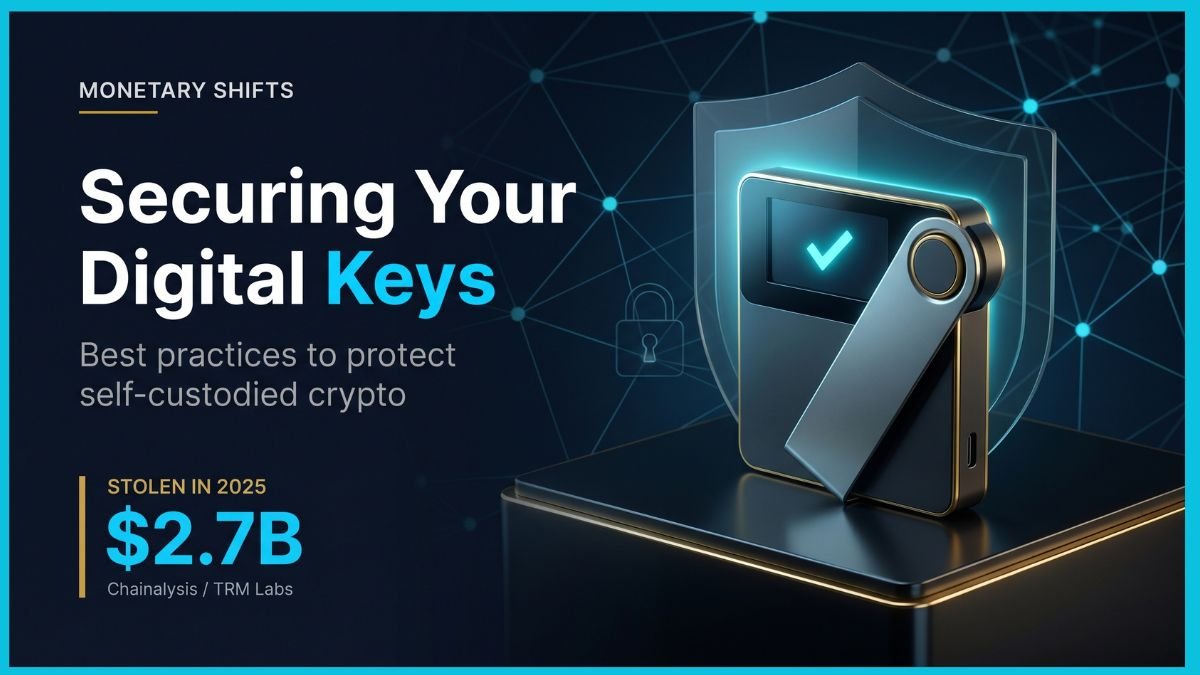
Self-custody puts you in charge of your own money, but it also makes you your own security department. In 2025, blockchain forensics firm Chainalysis tracked roughly $2.7 billion in stolen crypto, and personal wallet compromises surged to around 158,000 incidents affecting at least 80,000 individual victims. The threat is no longer aimed only at exchanges; ordinary holders are now squarely in the crosshairs. Strong crypto wallet security is what separates investors who keep their coins from those who learn the meaning of “not your keys, not your coins” the hard way. This crypto wallet security guide explains how wallets actually protect your assets, the practices institutional desks and serious self-custodians rely on, and the mistakes that drain wallets fastest. It sits within the broader story of how digital assets are reshaping custody, settlement, and ownership across the global financial system — and gives you a defensible playbook you can apply today. For readers still mapping the broader landscape, our guide to the cryptocurrency market for beginners places self-custody within the full market context.

About Financial Cryptarch
Financial Cryptarch is the Founder of Criptocurrencie and a finance professional with over 15 years of experience in Accounting and Corporate Finance. Holding a Bachelor’s Degree in Accounting and an MBA in Corporate Finance, he focuses on cryptocurrencies, macroeconomics, global finance, and international geopolitics, helping readers understand the forces shaping money, markets, and economic power.