Purchasing power refers to the quantity of goods and services that a unit of currency can buy at a given time. When inflation rises, purchasing power falls — meaning your money buys less. Central banks, including the Federal Reserve and the European Central Bank, monitor purchasing power closely as a core measure of monetary stability.
Introduction
Money is only as valuable as what it can buy. This is the essence of purchasing power — a concept that sits at the heart of macroeconomics, personal finance, and monetary policy. Whether you are saving for retirement, analyzing investment portfolios, or simply trying to understand why groceries cost more than they did a few years ago, purchasing power is the lens through which monetary value becomes tangible.
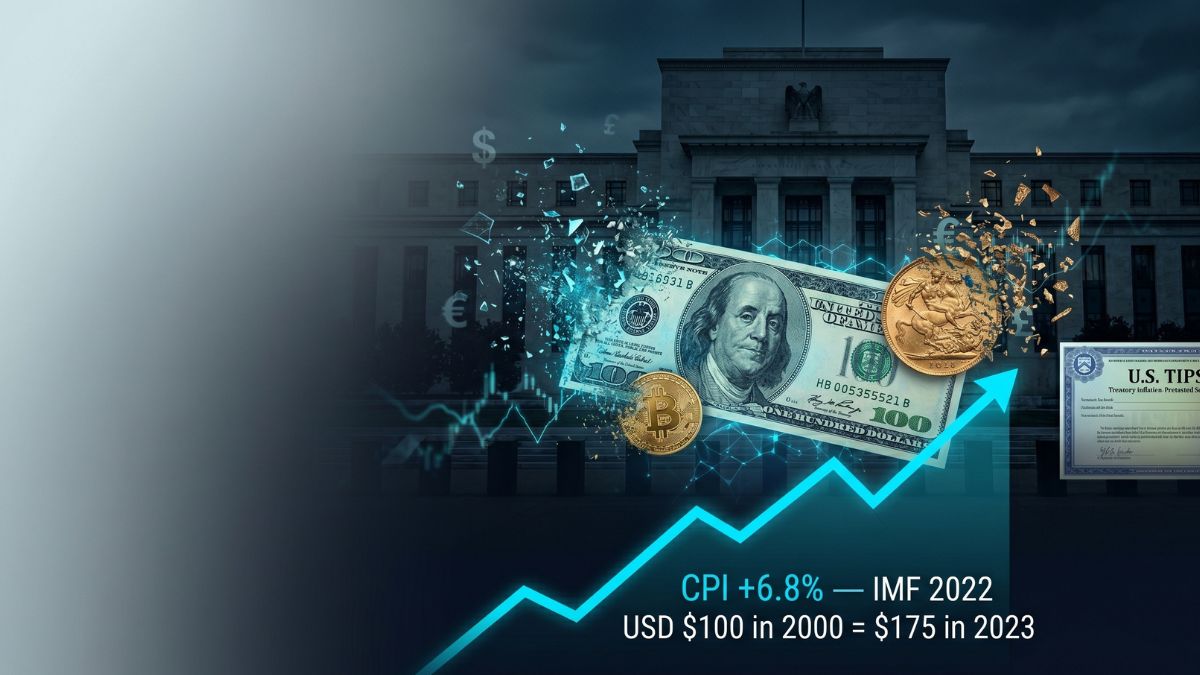
According to the International Monetary Fund, global inflation averaged 6.8% in 2022 — a four-decade high — eroding the real purchasing power of households across both advanced and emerging economies. The effects were not abstract: real wages fell, savings lost value, and consumer confidence declined sharply.
Understanding how purchasing power works, what drives its erosion, and how governments and individuals can respond is essential knowledge for anyone navigating today’s complex economic environment.
How Purchasing Power Works: The Core Mechanics
Purchasing power is the inverse of the price level. When prices rise across an economy — a phenomenon measured by the Consumer Price Index (CPI) — the amount of goods and services that a fixed sum of money can purchase declines proportionally.
The relationship is straightforward: if the CPI increases by 5% in a given year, the purchasing power of one dollar effectively decreases by approximately 4.76%. Over longer periods, this compounding effect becomes significant. A basket of goods that cost $100 in 2000 cost approximately $175 by 2023, according to Bureau of Labor Statistics data — representing a 43% erosion in dollar purchasing power over two decades.
Central banks attempt to stabilize purchasing power through monetary policy. The Federal Reserve’s dual mandate explicitly includes maintaining price stability, targeting an average inflation rate of 2% per year. The European Central Bank holds a similar inflation target for the eurozone.
The Relationship Between Inflation, Interest Rates, and Purchasing Power
Inflation is the most direct threat to purchasing power, but it does not act in isolation. Interest rates, monetary supply, and fiscal policy all interact to determine the real value of money over time.
When inflation accelerates, central banks typically raise interest rates to reduce the money supply and cool demand. Higher interest rates make borrowing more expensive, slowing consumer spending and business investment. This contraction in demand reduces upward price pressure and, over time, stabilizes or recovers purchasing power.
The Bank for International Settlements (BIS) noted in its 2023 Annual Economic Report that the post-pandemic inflation surge was driven by a combination of supply chain disruptions, fiscal stimulus, and accommodative monetary conditions — a rare confluence of factors that required coordinated global tightening. Between March 2022 and mid-2023, the Federal Reserve raised rates by more than 500 basis points in the fastest tightening cycle since the 1980s.
The lag between interest rate changes and their effect on inflation — typically 12 to 18 months — means that purchasing power can continue to erode even after policy action begins. This delay creates challenges for policymakers and uncertainty for households and businesses.
What Is Purchasing Power Parity (PPP)?
PPP is not just an academic concept — it has practical implications for international trade, investment decisions, and economic policy. The World Bank publishes international PPP comparisons, showing, for example, that GDP per capita measured at PPP often differs substantially from nominal GDP per capita. In 2023, China’s GDP measured at PPP exceeded that of the United States, even though its nominal GDP remained lower — a reflection of significantly lower price levels within the Chinese economy.
For investors and multinational corporations, PPP analyses help assess the real cost of production, labor, and operations across markets. For policymakers, PPP data informs decisions about exchange rate management, trade policy, and development financing.
Structural Factors That Erode Purchasing Power Over Time
Beyond cyclical inflation driven by demand, several structural forces can cause sustained erosion of purchasing power:
Monetary expansion: When central banks increase the money supply faster than economic output grows, the result is typically inflationary. Milton Friedman’s observation that “inflation is always and everywhere a monetary phenomenon” reflects the long-run relationship between money supply growth and price levels.
Supply-side constraints: Persistent disruptions to the production or distribution of key goods — whether from geopolitical conflict, climate-related events, or infrastructure failures — can reduce the quantity of goods available relative to demand, pushing prices up and purchasing power down.
Wage-price spirals: If workers successfully demand higher wages to compensate for inflation, and if businesses pass those labor costs through to prices, a self-reinforcing cycle can emerge. The OECD has flagged wage-price dynamics as a key risk in several post-pandemic assessments, noting that tight labor markets in advanced economies created conditions where such spirals become more likely.
Currency depreciation: For economies that rely heavily on imported goods, a weakening domestic currency raises the cost of imports and directly reduces purchasing power for domestic consumers — even if domestic inflation metrics remain relatively contained.
According to the World Bank’s Global Economic Prospects report, developing economies are disproportionately vulnerable to purchasing power erosion because they often face imported inflation (via commodity prices denominated in dollars), currency volatility, and limited capacity for countercyclical monetary policy.
Protecting Purchasing Power: Strategies for Individuals and Institutions
Understanding purchasing power erosion is only useful if it informs action. Both individual investors and institutional asset managers have developed strategies to preserve real value over time.
Inflation-linked bonds: Government-issued securities such as U.S. Treasury Inflation-Protected Securities (TIPS) or UK Index-Linked Gilts adjust their principal value in line with the CPI, providing a direct hedge against inflation and protecting purchasing power for fixed-income investors.
Real assets: Physical assets such as real estate, commodities, and infrastructure tend to retain or increase their nominal value during inflationary periods. Historically, commodities like gold have served as a store of value precisely because their purchasing power has remained relatively stable over centuries.
Equity investment: Stocks of companies with pricing power — the ability to pass cost increases to customers — have historically outpaced inflation over long periods. The S&P 500 has delivered average annual real returns of approximately 7% after inflation over the past century, according to data compiled by economist Robert Shiller.
Currency diversification: Holding assets denominated in multiple currencies can reduce exposure to the depreciation of any single monetary unit. Institutional investors routinely manage currency risk through hedging instruments, while individuals in high-inflation economies increasingly seek dollar or euro-denominated assets as a store of value.
For central banks and sovereign wealth funds, maintaining purchasing power is an institutional mandate. Norway’s Government Pension Fund Global — the world’s largest sovereign wealth fund — explicitly targets real returns above inflation to preserve the nation’s oil wealth for future generations.
People Also Ask
How does inflation affect purchasing power? Inflation reduces purchasing power by increasing the price level of goods and services. When prices rise, each unit of currency buys fewer goods than before. For example, if inflation is 5% annually, the purchasing power of $100 decreases to approximately $95.24 in real terms after one year. Sustained inflation compounds this effect significantly over time.
What causes purchasing power to decrease? Purchasing power decreases when inflation rises, when the money supply grows faster than economic output, or when a currency loses value relative to other currencies. Supply shocks — such as disruptions to energy or food production — can also reduce purchasing power by raising the cost of essential goods without corresponding increases in income.
What is real purchasing power? Real purchasing power refers to the inflation-adjusted value of a unit of currency — what money can actually buy after accounting for price-level changes. It contrasts with nominal purchasing power, which does not account for inflation. Real purchasing power is the more economically meaningful measure for assessing living standards and investment returns.
How do central banks protect purchasing power? Central banks protect purchasing power primarily by controlling inflation through monetary policy. Tools include setting benchmark interest rates, conducting open market operations, and adjusting reserve requirements. By targeting a stable, low rate of inflation — typically around 2% — institutions like the Federal Reserve and the ECB aim to preserve the real value of money over time.
What is the difference between purchasing power and purchasing power parity? Purchasing power refers to how much a currency can buy domestically at a given time. Purchasing Power Parity (PPP) is an international comparison tool that equalizes currency values based on the cost of a standardized basket of goods across different countries, enabling more accurate cross-country comparisons of income and output.
Conclusion
Purchasing power is not an abstract macroeconomic variable — it is the real-world expression of what money is worth. From household budgets to global investment strategies, the ability to understand, monitor, and protect purchasing power is a fundamental economic skill.
Inflation, monetary policy, currency dynamics, and structural economic forces all shape the trajectory of purchasing power over time. Being informed about these mechanisms allows individuals to make smarter financial decisions and helps policymakers design more effective monetary frameworks.
To deepen your understanding of how monetary systems affect wealth, explore the related concepts of inflation targeting, real interest rates, and currency hedging — each of which builds directly on purchasing power as a foundation.
FAQ
How is purchasing power calculated? Purchasing power is measured by tracking changes in the Consumer Price Index (CPI) over time. To calculate the change in purchasing power, divide the CPI at a base period by the CPI at a later period and multiply by 100. For example, if the CPI was 100 in 2010 and 140 in 2023, the purchasing power of the base year currency has declined by approximately 28.6%. Central banks and statistical agencies publish CPI data monthly, making purchasing power changes trackable in real time. The IMF and World Bank also publish cross-country purchasing power comparisons using PPP-adjusted data.
Does purchasing power affect investment decisions? Yes, purchasing power is a central consideration in investment planning. Investors must distinguish between nominal returns — the stated percentage gain on an investment — and real returns, which account for inflation. An investment yielding 6% annually in a 4% inflation environment delivers only 2% in real terms. Asset classes respond differently to inflationary environments: equities with pricing power, real estate, commodities, and inflation-linked bonds tend to preserve or grow purchasing power better than cash or nominal fixed-income instruments during periods of elevated inflation.
What role does purchasing power play in international trade? In international trade, purchasing power parity helps determine whether a currency is overvalued or undervalued relative to its trading partners. Countries with lower price levels — meaning higher PPP purchasing power per unit of currency — may have competitive advantages in export markets because their production costs are effectively lower. Exchange rate misalignments relative to PPP are monitored by the IMF as part of its Article IV consultations with member countries and can signal risks of trade imbalances or currency volatility.
How did the COVID-19 pandemic affect global purchasing power? The COVID-19 pandemic triggered one of the most significant disruptions to global purchasing power in decades. Massive fiscal stimulus programs in advanced economies, combined with supply chain dislocations and a sharp rebound in demand, drove inflation to multi-decade highs by 2021-2022. In the United States, the CPI peaked at 9.1% in June 2022 — the highest level since 1981. Lower-income households were disproportionately affected, as a larger share of their budgets is allocated to necessities such as food, energy, and housing, which experienced some of the sharpest price increases.
Can governments restore lost purchasing power? Restoring purchasing power once it has been eroded by inflation is difficult and slow. Disinflation — a reduction in the rate of inflation — stabilizes purchasing power but does not restore lost value. Deflation, a sustained decline in the price level, would theoretically reverse purchasing power losses but carries severe economic risks including debt deflation spirals and demand collapse, as seen in Japan’s lost decades. The most effective approach is prevention: maintaining credible, low-inflation monetary frameworks and fiscal discipline that limits excessive money supply growth.
What is the relationship between wages and purchasing power? Wages affect purchasing power directly: when nominal wage growth outpaces inflation, real wages rise and purchasing power improves. When inflation exceeds wage growth, real wages fall and households experience a decline in living standards. During the 2021-2023 inflation surge, real wages declined in most advanced economies despite historically low unemployment, as price increases outpaced negotiated pay raises. The OECD and ILO track real wage trends globally as a key indicator of household purchasing power and economic welfare.
Important Notice
This article is intended for informational and educational purposes only. The content covers macroeconomic concepts related to purchasing power, monetary policy, and financial instruments. It does not constitute financial, investment, legal, or tax advice. Readers should consult qualified financial professionals before making any investment or financial decisions. Economic conditions, policy frameworks, and market dynamics are subject to change; all data cited reflects information available at the time of publication.

About Financial Cryptarch
Financial Cryptarch is the Founder of Criptocurrencie and a finance professional with over 15 years of experience in Accounting and Corporate Finance. Holding a Bachelor’s Degree in Accounting and an MBA in Corporate Finance, he focuses on cryptocurrencies, macroeconomics, global finance, and international geopolitics, helping readers understand the forces shaping money, markets, and economic power.