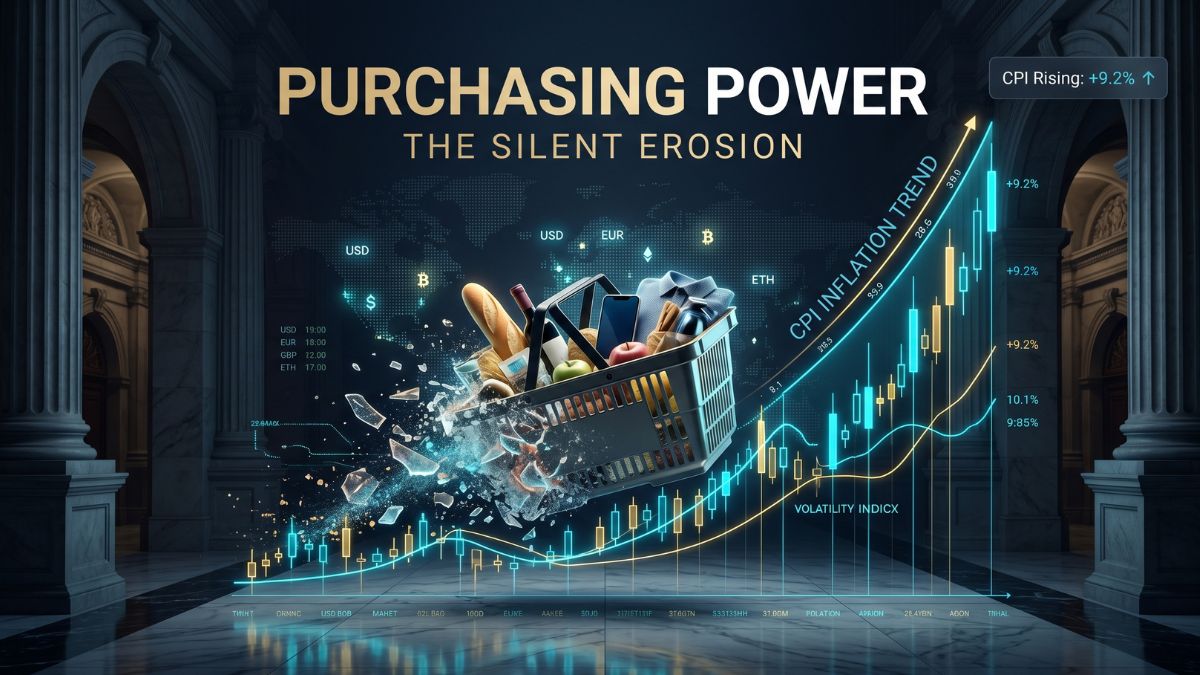
Inflation Explained refers to the gradual increase in the prices of goods and services over time, which reduces the purchasing power of money. When inflation rises, each dollar buys fewer products and services than before. Understanding inflation is essential because it affects wages, savings, investments, interest rates, and the overall economy.
Introduction
If groceries, rent, insurance, and utility bills seem more expensive than they were a few years ago, inflation is likely one of the main reasons.
Inflation affects nearly every aspect of daily life. Whether you are a worker, business owner, investor, retiree, or student, rising prices influence your financial decisions and long-term purchasing power.
According to the OECD, average consumer prices across member countries were approximately 36% higher in late 2025 than they were in 2019, illustrating how persistent inflation can gradually erode living standards. (Source: https://www.oecd.org/en/data/insights/statistical-releases/2026/02/consumer-prices-oecd-updated-9-february-2026.html)
While inflation is often discussed in news headlines, many people do not fully understand what it is, what causes it, or why governments and central banks pay so much attention to it.
This guide provides a complete explanation of inflation, how it works, why it happens, and how it impacts your money.
What Is Inflation?
Inflation is the rate at which the general price level of goods and services increases over time.
As prices rise, the purchasing power of a currency declines.
For example:
- A loaf of bread that costs $2 today may cost $2.20 next year.
- Rent that costs $1,000 per month may increase to $1,050.
- A vehicle priced at $30,000 could cost $32,000 a few years later.
When these increases occur broadly across the economy, economists refer to it as inflation.
Quick Definition
The OECD defines inflation as the annual change in the price of a representative basket of goods and services purchased by households. (Source: https://www.oecd.org/en/data/indicators/inflation-cpi.html)
How Inflation Is Measured
Most countries measure inflation using a Consumer Price Index (CPI).
A CPI tracks the cost of a basket of commonly purchased items, including:
- Housing
- Food
- Transportation
- Healthcare
- Education
- Energy
- Clothing
- Recreation
Statistical agencies regularly monitor thousands of prices and calculate how much they change over time.
Common Inflation Measures
| Measure | Description |
|---|---|
| CPI | Measures changes in consumer prices |
| Core CPI | Excludes food and energy prices |
| PPI | Tracks prices paid by producers |
| PCE | PCE — Preferred inflation measure of the Federal Reserve |
Because food and energy prices can be volatile, policymakers often focus on core inflation when evaluating long-term trends.
What Exactly Causes Inflation?
There is no single cause of inflation.
Instead, inflation typically results from a combination of economic forces.
1. Demand-Pull Inflation
Demand-pull inflation occurs when consumer demand exceeds available supply.
Examples include:
- Strong economic growth
- Rising wages
- Increased government spending
- Easy access to credit
When too many people compete for limited goods and services, prices rise.
2. Cost-Push Inflation
Cost-push inflation happens when production costs increase.
Common causes include:
- Higher wages
- Rising energy prices
- Supply chain disruptions
- Increased transportation costs
- Higher taxes or tariffs
Businesses often pass these higher costs on to consumers.
3. Monetary Expansion
When the money supply grows faster than economic output, inflationary pressures can emerge.
Historically, economists from multiple schools of thought have observed that excessive monetary expansion tends to support higher inflation over time.
4. Supply Shocks
Unexpected events can create inflation by restricting supply.
Examples include:
- Wars
- Natural disasters
- Pandemics
- Energy crises
- Trade disruptions
Recent OECD research showed that energy-related price shocks were a major contributor to inflation increases during 2026. (Source: https://www.oecd-ilibrary.org/en/data/insights/statistical-releases/2026/06/consumer-prices-oecd-updated-4-june-2026.html)
Why Are Trump’s Tariffs Not Always Causing Inflation?
This is one of the most common questions in economic discussions.
The simple answer is that tariffs can contribute to inflation, but they do not automatically create broad inflation across an entire economy.
Quick Answer
Several outcomes are possible:
- Companies absorb costs through lower profit margins.
- Consumers pay higher prices.
- Importers switch suppliers.
- Domestic producers increase production.
As a result, tariffs may increase prices in certain sectors without necessarily causing sustained nationwide inflation.
The Different Types of Inflation
Moderate Inflation
Annual inflation between roughly 2% and 4%.
Most central banks consider moderate inflation normal and manageable.
High Inflation
Inflation significantly above central bank targets.
This often reduces household purchasing power and increases economic uncertainty.
Hyperinflation
Extremely rapid price increases, sometimes exceeding 50% per month.
Historical examples include:
- Germany (1923)
- Zimbabwe (2000s)
- Venezuela (2010s)
Hyperinflation can destroy savings and destabilize entire economies.
Deflation
The opposite of inflation.
Prices decline over time.
Although lower prices may sound attractive, persistent deflation can reduce spending, investment, and economic growth.
How Inflation Affects Everyday Life
Inflation influences far more than grocery bills.
Consumers
Consumers face:
- Higher living costs
- Reduced purchasing power
- Increased household budgets
Workers
Workers may benefit if wages rise faster than inflation.
However, if inflation outpaces wage growth, real income falls.
Savers
Cash loses purchasing power during inflationary periods.
For example:
- $10,000 held in cash loses real value when prices rise.
- The money remains the same numerically but buys fewer goods and services.
Borrowers
Moderate inflation can benefit borrowers because debts are repaid using future dollars that may be worth less.
Investors
Some assets historically perform better during inflationary periods than others.
These may include:
- Stocks
- Real estate
- Commodities
- Gold
Performance varies depending on the economic environment.ZZZZ
How Much Will $5,000 Be Worth in 20 Years of Inflation?
The answer depends on the inflation rate.
The following examples assume constant inflation.
| Annual Inflation | Purchasing Power After 20 Years |
|---|---|
| 2% | About $3,364 |
| 3% | About $2,768 |
| 4% | About $2,282 |
| 5% | About $1,885 |
Even relatively low inflation significantly reduces purchasing power over long periods.
This illustrates why inflation matters for retirement planning, savings, and long-term wealth preservation.
Why Central Banks Target Inflation
Most modern central banks aim for approximately 2% annual inflation.
Institutions such as the Federal Reserve, European Central Bank, and Bank of England generally view low and stable inflation as beneficial because it:
- Supports economic growth
- Encourages spending and investment
- Reduces deflation risks
- Maintains confidence in the currency
Recent IMF assessments continue to emphasize inflation control as a primary objective of monetary policy. Global inflation stabilized near 3.5% during late 2025, although regional differences remained significant. (Source: https://data.imf.org/en/news/imf%20data%20brief%20february%2025)
Inflation in 2025 and 2026
Inflation remains one of the most important economic topics worldwide.
According to OECD data:
- OECD inflation reached 4.4% in April 2026.
- Energy prices were a major driver of renewed inflation pressures.
- Energy inflation exceeded 13% year-over-year in several OECD economies.
Meanwhile, IMF and Federal Reserve discussions continue to focus on balancing economic growth, employment, and price stability.
Persistent geopolitical tensions, energy markets, and supply chain developments remain key inflation drivers entering the second half of 2026.
How Individuals Can Protect Themselves Against Inflation
Although nobody can eliminate inflation risk completely, several strategies may help reduce its impact.
- Increase financial literacy.
- Maintain emergency savings.
- Invest for long-term growth.
- Avoid excessive debt.
- Develop skills that increase earning potential.
- Diversify assets.
- Monitor changes in living costs.
The goal is not to predict inflation perfectly but to remain financially adaptable.
Inflation vs. Deflation: Understanding the Critical Difference
Although inflation receives most of the attention, economists also closely monitor deflation.
While inflation refers to rising prices, deflation occurs when the overall price level declines over time.
At first glance, falling prices may seem beneficial. Consumers pay less for goods and services, potentially increasing purchasing power. However, persistent deflation often creates serious economic problems.
When consumers expect prices to continue falling, they may postpone purchases. Businesses respond by reducing production, delaying investment, and cutting jobs. This can create a self-reinforcing cycle of economic weakness.
Inflation vs Deflation Comparison
| Factor | Inflation | Deflation |
|---|---|---|
| Prices | Rise over time | Fall over time |
| Purchasing Power | Declines | Increases |
| Consumer Behavior | Encourages spending | Encourages waiting |
| Business Investment | Usually supported | Often delayed |
| Debt Burden | Easier to repay | Harder to repay |
| Economic Growth | Can support growth when moderate | Often associated with stagnation |
One of the most cited examples of prolonged deflation occurred in Japan following the collapse of its asset bubble in the early 1990s. The country experienced decades of slow growth and persistent price weakness despite repeated monetary stimulus efforts.
For this reason, most central banks prefer low and stable inflation rather than zero inflation.
The Relationship Between Inflation and Interest Rates
One of the most important relationships in economics is the connection between inflation and interest rates.
When inflation rises above target levels, central banks often increase interest rates to reduce spending and borrowing.
Higher rates affect the economy through several channels:
- Mortgages become more expensive.
- Business loans become costlier.
- Consumer credit slows.
- Asset prices may decline.
- Savings accounts become more attractive.
According to the Federal Reserve, monetary policy works by influencing financial conditions, aggregate demand, and ultimately inflation itself.
Quick Definition
The inflation surge of 2021–2023 demonstrated this relationship clearly. Central banks worldwide raised rates aggressively in an effort to bring inflation back toward target levels.
Inflation and Bitcoin: Why Investors Pay Attention
Bitcoin has increasingly become part of the inflation discussion.
Supporters often describe Bitcoin as a potential hedge against monetary debasement because its supply is limited to 21 million coins.
The argument is straightforward:
- Fiat currencies can be expanded by central banks.
- Bitcoin has a fixed issuance schedule.
- Scarcity may support long-term value preservation.
However, the relationship is more complex than many headlines suggest.
In practice, Bitcoin has frequently behaved as a risk asset rather than a pure inflation hedge.
For example:
- During periods of abundant liquidity, Bitcoin often performs strongly.
- During aggressive rate hikes, Bitcoin has historically faced downward pressure alongside technology stocks.
This suggests Bitcoin may be influenced by monetary conditions, liquidity, investor sentiment, and adoption trends—not inflation alone.
What Research Suggests
Academic and market research remains divided.
Some studies suggest Bitcoin may act as a hedge against extreme monetary instability.
Others conclude that Bitcoin’s relatively short history makes definitive conclusions difficult.
The reality is that Bitcoin’s role in inflation protection remains an evolving topic.
Inflation and Gold: A 5,000-Year Store of Value
Long before modern financial markets existed, gold served as money.
For thousands of years, civilizations used gold as a medium of exchange and store of value because of its scarcity, durability, and universal acceptance.
During periods of monetary instability, investors often increase exposure to gold.
Common reasons include:
- Limited supply growth.
- Independence from government liabilities.
- Historical reputation as a safe-haven asset.
- Global recognition and liquidity.
However, gold does not always outperform during inflationary periods.
Its performance often depends on:
- Real interest rates.
- Currency strength.
- Investor sentiment.
- Geopolitical uncertainty.
When real interest rates become deeply negative, gold has historically tended to perform particularly well.
Historical Inflation Crises That Changed the World
Inflation is not merely an economic statistic.
Throughout history, inflation crises have reshaped governments, societies, and entire monetary systems.
Weimar Germany (1921–1923)
Following World War I, Germany experienced one of history’s most famous hyperinflation episodes.
At its peak:
- Prices doubled within days.
- Workers were paid multiple times per day.
- Savings became virtually worthless.
The crisis fundamentally transformed public trust in money and institutions.
Zimbabwe (2007–2008)
Zimbabwe experienced hyperinflation so severe that annual inflation reached astronomical levels.
The national currency ultimately collapsed and foreign currencies replaced it in everyday transactions.
Venezuela (2010s)
A combination of economic mismanagement, collapsing oil revenues, and monetary expansion contributed to one of the worst inflation crises in modern history.
Millions of citizens experienced dramatic declines in purchasing power.
Key Lesson
Hyperinflation is rarely caused by a single factor.
It typically emerges from a combination of:
- Fiscal instability.
- Political crises.
- Monetary expansion.
- Loss of confidence in institutions.
CPI vs PCE: Why Economists Watch Both
Inflation headlines usually reference CPI, but policymakers often pay closer attention to another measure: the Personal Consumption Expenditures Price Index (PCE).
CPI
Measures prices paid directly by consumers.
Advantages:
- Easy to understand.
- Widely followed.
- Frequently cited by media.
PCE
Measures broader spending patterns and adjusts for changes in consumer behavior.
Advantages:
- Broader coverage.
- More dynamic weighting.
- Preferred by the Federal Reserve.
| Measure | CPI | PCE |
|---|---|---|
| Coverage | Consumer purchases | Broader consumption |
| Weight Updates | Less frequent | More frequent |
| Federal Reserve Preference | No | Yes |
| Media Usage | High | Moderate |
Because of these differences, CPI and PCE sometimes show slightly different inflation rates.
Who Wins and Who Loses During Inflation?
Inflation creates both winners and losers.
Potential Winners
- Owners of real assets.
- Businesses with pricing power.
- Borrowers with fixed-rate debt.
- Commodity producers.
Potential Losers
- Cash savers.
- Fixed-income retirees.
- Workers whose wages lag inflation.
- Holders of long-term fixed-rate bonds.
The impact depends heavily on how quickly income and asset values adjust relative to rising prices.
This explains why inflation often redistributes wealth rather than affecting everyone equally.
Inflation Outlook for 2026 and 2027
Most major economic institutions expect inflation to remain above pre-pandemic averages but below the peaks experienced earlier in the decade.
Key factors likely to influence inflation include:
- Energy markets.
- Geopolitical conflicts.
- Global supply chains.
- Labor market conditions.
- Government deficits.
- Central bank policies.
Many economists believe the era of near-zero inflation that characterized much of the 2010s may not return quickly.
Instead, businesses, investors, and households may need to adapt to a world where inflation remains structurally higher than historical norms.
The challenge for policymakers will be maintaining price stability without triggering significant economic slowdowns.
Conclusion
Understanding inflation is essential because it affects nearly every financial decision people make.
Inflation influences wages, savings, investments, housing costs, retirement planning, interest rates, and economic growth. While moderate inflation is considered normal in modern economies, persistent inflation can significantly reduce purchasing power over time.
By understanding what causes inflation, how it is measured, and how policymakers respond to it, individuals can make more informed financial decisions and better protect their long-term purchasing power.
As inflation continues to shape the global economy in 2026, financial literacy remains one of the most valuable tools available to households and investors.
Important Disclaimer
The information presented in this article is for educational and informational purposes only and does not constitute investment advice. Consult a qualified financial professional before making financial or investment decisions.
FAQ
How to explain inflation in simple terms?
Inflation means prices rise over time, causing money to buy fewer goods and services. If inflation increases while income stays the same, purchasing power declines.
What exactly causes inflation?
Inflation can result from increased demand, higher production costs, supply shortages, energy shocks, or growth in the money supply relative to economic output.
Why are Trump’s tariffs not causing inflation?
Tariffs can increase prices in specific sectors, but broad inflation depends on multiple factors including wages, consumer demand, monetary policy, energy prices, and supply chains.
Is inflation always bad?
No. Moderate inflation is generally considered a normal feature of a growing economy. Problems arise when inflation becomes excessively high or unpredictable.
How much will $5,000 be worth in 20 years of inflation?
At 3% annual inflation, $5,000 would have purchasing power equivalent to roughly $2,768 after 20 years.
Who benefits from inflation?
Borrowers, some businesses, and owners of certain assets may benefit under specific inflationary conditions. The impact depends on income growth, debt levels, and asset ownership.
What is the difference between inflation and cost of living?
Inflation measures average price changes across an economy, while cost of living refers to the amount of money needed to maintain a specific standard of living in a particular location.

About Financial Cryptarch
Financial Cryptarch is the Founder of Criptocurrencie and a finance professional with over 15 years of experience in Accounting and Corporate Finance. Holding a Bachelor’s Degree in Accounting and an MBA in Corporate Finance, he focuses on cryptocurrencies, macroeconomics, global finance, and international geopolitics, helping readers understand the forces shaping money, markets, and economic power.